- On this page
If your kitchen hood could talk, it would probably complain long before it evercaught fire. The trouble is, most commercial kitchens only notice the problemwhen the smoke gets thicker, the smell gets sharper, or an inspector startsasking uncomfortable questions 🤔
Acommercial kitchen hood is not just a metal box above the stove. It is part ofa full fire protection system that includes the grease filters, plenum,ductwork, exhaust fan, and fire suppression system. Whengrease buildup starts creeping through that system, the hood stops being ahelper and starts becoming a hazard.
Thatis why NFPA 96 matters so much. It sets the baseline for cleaning frequency, inspection, access panels, documentation, and maintenance forcommercial cooking operations. And yes, local fire marshals or the AHJ can require even more.
Inthis article, you will learn the 7 warning signs your kitchen hood is a firerisk, what each sign really means, and when it is time to call forprofessional hood cleaning or a fire suppression inspection. Ifyou run a restaurant, hotel kitchen, ghost kitchen, cafeteria, or anyhigh-volume cooking space, this is one of those topics you do not want to 'dealwith later.
What makes a kitchen hood a fire risk?
Akitchen hood becomes dangerous when it starts collecting grease buildupfaster than it is being cleaned. That grease does not stay politely on thevisible stainless steel. It travels into the plenum, settles inside the ductwork, sticks to fan blades, and hides in horizontal duct runs where nobodysees it.
Thathidden grease load is the real problem. Cooking creates grease-laden vapors, and those vapors cool down inside the exhaust system. When they cool, theycondense. Over time, the system becomes a fuel path instead of a ventilationpath.
Grease buildup turns the exhaust system into fuel
Theexhaust system is basically a long, hidden tunnel carrying grease residue awayfrom your cooking line. If that tunnel is coated with grease, you are no longerjust moving air. You are storing combustible material above hot equipment.
Engineeringsources put grease deposits at roughly 375°F flash point and around 600° Fignition temperature for hood and duct deposits. That matters becausecommercial cooking surfaces often exceed 500°F, and flare-ups can go evenhigher. So the system can sit uncomfortably close to ignition during normalservice.
Why NFPA 96 matters
NFPA96 is thestandard for ventilation control and fire protection in commercial cookingoperations. It covers the whole system: hood, filters, ducts, fans,suppression, access panels, inspection, and documentation.
Onedetail many operators miss: the famous '1/8-inch grease rule' is oftenmisunderstood. In NFPA 96 guidance, the paper-thin film concept appliesbroadly, while the 1/8-inch threshold is fan-housing-specific. In plainEnglish? You do not need a thick layer of grease to have a problem. A thin filmcan already be enough to trigger cleaning.
Why suppression systems do not eliminate hood fire risk
Awet chemical fire suppression system is important, but it is not magicarmor. It is designed mainly to protect the hood, plenum, and cooking area. Itdoes not replace full-system cleaning.
Aduct fire can move fast. Some field reporting says duct fires can travel 40+feet in under 60 seconds. That is faster than many people expect, and it isone reason why a clean duct system matters just as much as a workingsuppression system.
A suppression system helps control a fire.
A clean exhaust system helps prevent one.
Ifyou are comparing contractors, start with commercial hood services in Ohio and verify the credential, not just the price.
Warning Sign 1: Visible grease dripping from the hood orfilter frames
Thisis one of the easiest signs to spot, and also one of the hardest to ignore onceyou notice it.
Ifgrease is dripping from the hood edge, filter frame, or seams during service,the system is telling you something very direct: it is overloaded.
What this warning sign looks like
Youmay see sticky trails on the stainless steel, wet-looking residue around thefilters, or grease collecting where it should never collect. Sometimes it lookslike a shiny film. Sometimes it looks like dark streaks. Either way, it is notnormal.
Why dripping grease is dangerous
Drippingusually means one of two things:
● the grease filters aresaturated and no longer capturing properly, or
● grease is bypassing the filters andentering the plenum and ductwork
Thatcreates a fire risk and a sanitation problem at the same time. Grease can fallonto hot equipment, floors, or food-contact areas. That is a messy combinationnobody wants.
What to do next
Donot just wipe the outside and move on. If dripping is happening, the systemlikely needs a full-system cleaning, not a surface touch-up. If thiskeeps happening, your cleaning frequency may be too low for your cookingvolume.
Ifthe hood itself is damaged or poorly configured, cleaning alone may not solve the issue. That is where our commercial hood installation service can help when the problem is structural, not just greasy.
Warning Sign 2: Grease film or discoloration on the outsideof the hood
Ahood should not look like it has been through a fryer marathon.
Ifyou see a greasy film, yellowing, dark streaks, or discoloration on the outsidecanopy, that is a clue that grease-laden vapors are escaping where they shouldnot.
Why exterior buildup matters
Exteriorgrease usually means the hood is not containing vapors properly. That canhappen because of poor capture, saturated filters, airflow problems, or greaseescaping from seams and edges.
Andhere is the part many operators miss: if grease is visible on the outside, theinside is often worse.
What it may indicate inside the system
Exteriorbuildup can point to:
● saturated or damaged greasefilters
● poor hood capture over the cookingline
● grease escaping into the plenum
● contamination deeper in the ductwork
● a fan system that is not moving airthe way it should
Why operators should not ignore it
Thisis not just a cosmetic issue. It is a fire-risk clue and a maintenance clue.Inspectors may also see it as evidence that the system is not being maintainedproperly.
Ifyou are already seeing discoloration, do not wait for the next routine servicedate. Document it, clean it, and inspect the full exhaust path.
Warning Sign 3: The kitchen feels smokier or hotter thanusual
Thisone often shows up before anything dramatic happens.
Ifyour kitchen suddenly feels like it is holding onto smoke, heat, or cookingodors longer than usual, your exhaust system may be losing performance.
Reduced airflow is one of the earliest performance clues
Asmoky kitchen is often a sign that the exhaust fan is not pulling airefficiently. You may notice lingering odors, haze near the cooking line, orstaff complaining that the kitchen feels 'heavy.'
Thatis not just discomfort. It is a warning.
Common causes behind poor airflow
Poorairflow can come from:
● grease-loaded filters
● buildup inside the ductwork
● a worn fan belt
● grease-coated fan blades
● a failing motor
● blocked or restricted airflow paths
Aworn belt or failing motor can reduce airflow, which causes grease vapor tocondense faster inside the system. That means more buildup, more heat, and morerisk.
Why this is a fire warning, not just a comfort issue
Whenairflow drops, grease-laden vapors stay in the system longer. That gives themmore time to settle on duct walls and fan housing. It also means the kitchen isworking harder to remove heat and smoke.
Ifyour kitchen is smokier than it used to be, do not shrug it off. That is oftenthe exhaust system asking for help.
Warning Sign 4: Unusual burning smells during service
Aburning smell in a commercial kitchen is not something to 'wait and see' about.
Thereis a big difference between normal cooking aromas and a sharp, acrid,hot-grease smell. If you can smell something that feels off, trust thatinstinct.
How to recognize a dangerous odor
Thissmell often shows up during peak cooking, after a flare-up, or when the systemis under heavy load. It may smell like hot oil, scorched residue, or somethingslightly electrical mixed with grease.
Thatis not a scent to get used to.
What the smell may mean
Aburning odor can mean grease deposits are getting close to ignitiontemperature. It may also mean hidden buildup in the plenum or ductworkis heating up before flames appear.
Remember:grease deposits can ignite around 600°F, and the flash point may be near375°F. That is why a smell can be an early warning, not a late one.
Immediate response
Ifthe smell is strong or recurring, stop and investigate. Do not wait for thenext scheduled cleaning. If needed, shut down cooking under that hood and callfor an inspection.
Thisis one of those moments where being cautious is not overreacting. It is smart.
Warning Sign 5: The exhaust fan is noisy, vibrating, orstruggling
Theexhaust fan is the engine of the whole system. If it starts actingweird, the rest of the system usually follows.
Fan problems often point to grease contamination
Noise,rattling, vibration, humming, or a rough startup can mean grease has built upon the fan blades or inside the housing. A worn belt or failing motor can alsobe part of the problem.
Rooftopfans are especially important because they sit near grease accumulation andheat-producing components. If the fan is struggling, the whole exhaust pathsuffers.
Why fan issues increase fire risk
Adegraded fan does more than make noise. It changes airflow, which changes howgrease moves through the system. Poor fan performance can cause grease vapor tocondense faster in the ducts.
Italso creates heat and imbalance near grease deposits. That is a bad mix.
What to inspect
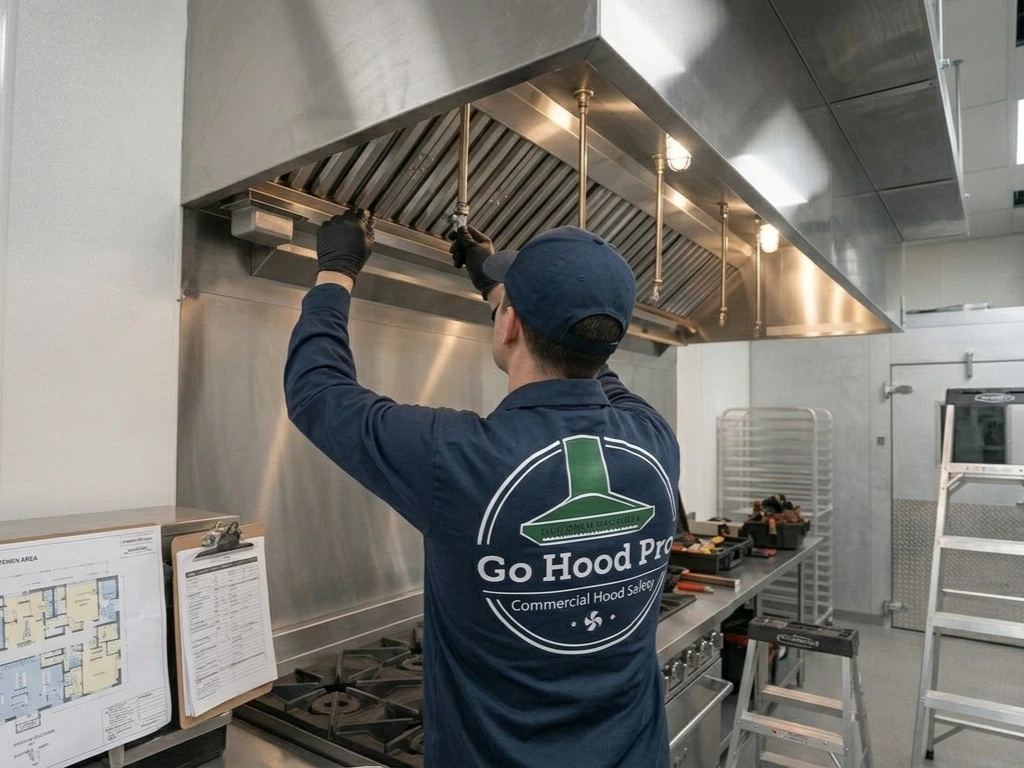
Checkthe fan blades, belt condition, motor performance, and housing cleanliness. Ifthe fan is rooftop-mounted, make sure access is safe and the housing isserviceable.
Afan issue is not just a repair ticket. It is a fire-risk multiplier.
Ifyou need a certified checkup, a semi-annual fire suppression inspection should be part of the same maintenance mindset, because fan problems andsuppression problems often show up together during inspections.
Warning Sign 6: Grease buildup is visible in filters,plenum, or duct access areas
Ifyou can see grease in service areas, the hidden parts are probably worse.
Why visible buildup in service areas is a major red flag
Thegrease filters, plenum chamber, and access panels are theplaces where you can actually verify cleanliness. If those areas are dirty, thesystem is not being maintained to a safe standard.
Thatusually means the hood has not been cleaned to bare metal, or the cleaning wasonly surface-deep.
The hidden danger of ductwork
Thereal danger lives in the ductwork. It is hidden, hot, and easy toforget. Horizontal duct runs are especially risky because grease can poolinstead of draining. Older buildings with complex routing can collect hardenedgrease in places nobody sees until an inspection.
Thisis why duct access panels matter so much. Without them, you cannotproperly inspect or clean the system. A hood system that cannot be accessedproperly cannot be maintained properly.
Why access panels matter
NFPA96 expects access openings so the system can be inspected and cleaned. In manysystems, horizontal ducts need access panels at intervals commonly cited aroundevery 12 feet. That is not a decorative detail. It is how the systemgets verified.
Ifyour contractor never opens access panels, that is a problem. If your systemdoes not have enough access points, that is also a problem.
Warning Sign 7: Cleaning records, inspection tags, orservice labels are missing
Thisone is less visible, but it can be just as serious as grease dripping from thehood.
Documentation is part of fire safety
UnderNFPA 96, cleaning is not complete unless the paperwork is there too. Thatincludes service labels, inspection reports, cleaning reports, and tags atopened access panels.
Inother words, the paper trail is part of the safety system.
Why missing paperwork is a serious liability
Ifa fire happens and you cannot produce dated, signed cleaning records, insurancecarriers may question negligence. Fire marshals and AHJs also look atdocumentation during inspections.
Norecords can mean no proof. And no proof can become a very expensiveconversation.
What a compliant record trail should include
Aproper trail should show:
● the date of service
● the company name
● the certified person who performedthe work
● inspection findings
● cleaning findings
● any inaccessible or skipped areas
● service labels on the hood
● tags at opened access panels
Ifa report does not mention skipped or inaccessible areas, that is a red flag byitself. It usually means the crew did not look very hard.
Related reading: if warning signs keep stacking up, it may be time to lookbeyond cleaning — explore the commercial kitchen services we provide to fix airflow, ductwork, and suppression problems at the source.
Other signs your kitchen hood may be unsafe
Sometimesthe warning signs are less dramatic, but still important.
Grease dripping onto the floor or equipment
Ifgrease is escaping the hood system and landing on the floor or nearbyequipment, that is both a fire hazard and a slip hazard. It also suggests thesystem is overdue for cleaning.
Filters that look saturated or damaged
Bent,clogged, or heavily coated grease filters reduce capture efficiency. Iffilters are damaged, more grease can enter the duct system. Filters should becleaned or replaced according to manufacturer guidance.
A kitchen that keeps failing inspections
Repeatedviolations usually mean the problem is bigger than one dirty hood. It may be acleaning schedule issue, a documentation issue, or a suppression service issue.Repeated failures can lead to fines, reinspection fees, or even shutdown risk.
Ifyour kitchen keeps getting flagged, it may be time to look at the whole system,not just the visible hood.
How often should a commercial kitchen hood be cleaned?
Thisis where a lot of kitchens get tripped up.
NFPA96 uses cooking volume and fuel type to determine inspection andcleaning intervals. Our NFPA 96 cleaning frequency guide walks through eachcategory in detail. The common categories are:
● Monthly for solid fuel cooking operations
● Quarterly for high-volume cooking such as24-hour, charbroiling, or wok
● Semiannually for moderate-volume kitchens
● Annually for low-volume operations likechurches, camps, seasonal businesses, or senior centers
Common mistake: underestimating cooking intensity
Oneof the biggest compliance mistakes is misclassifying the kitchen. A sit-downrestaurant running a charbroiler ten hours a day is not really 'moderate' inpractical terms. It behaves more like a high-volume kitchen.
Thatmatters because the wrong schedule means grease buildup gets ahead of cleaning.
Why 'semiannual is fine' is not always true
Thatadvice gets repeated a lot, but it is not universal. Local AHJs can requiremore frequent service, and high-grease cooking styles often need tighterintervals.
Ifyour kitchen uses deep frying, charbroiling, shawarma-style cooking, wokstations, or long operating hours, your cleaning schedule may need to be moreaggressive than you think.
Foroperators in high-grease environments, hood services in Columbus can help before the correction window closes.
What happens if you ignore these warning signs?
Shortanswer: the risk climbs fast.
Fire risk increases quickly
Greasebuildup can ignite and spread through the exhaust system. Once a duct firestarts, it can move faster than many people expect. The hood may be where thefire begins, but the ductwork is often where it travels.
Inspection failure and shutdown risk
Visiblegrease, missing documentation, overdue service, or suppression issues cantrigger violations. In serious cases, the kitchen may need to stop operatinguntil the hazard is corrected.
Insurance and liability consequences
Ifa fire happens and maintenance records are missing, insurers may challenge theclaim. That is why documentation is not just paperwork. It is part of yourprotection plan.
Acomplete NFPA 96-compliant full-system cleaning is not the same as aquick wipe-down. Market benchmarks put a proper service starting around $599,depending on system size and grease load. Discount services below that rangeoften skip manual duct entry and fail the standard.
How to reduce kitchen hood fire risk before it becomes anemergency
Youdo not need to wait for smoke, flames, or a red tag.
Schedule full-system cleaning, not just surface cleaning
Thehood, filters, plenum, ductwork, and fan all need attention. A visiblestainless-steel wipe-down is not enough. The real goal is bare-metal cleaningwhere required.
Inspect the fan and duct access points
Ifthe fan is noisy or airflow is weak, check the fan housing, blades, belt, andmotor. Make sure access panels are present and usable. If the system cannot beopened and inspected, it cannot be properly maintained.
Keep documentation organized
Storeservice labels, inspection reports, and cleaning records on-site. If aninspector asks, you should not have to go hunting through old emails and randomfolders.
Use a qualified commercial kitchen exhaust contractor
NFPA96 expects trained, qualified, and certified personnel acceptable to the AHJ.Kitchen staff can handle daily visible cleaning, but they cannot replace acompliant full-system service.
Ifyou want to compare service options, hood inspection support in Louisvilleis a useful place to start for regional operators.
When to call for professional hood cleaning or inspection
Callsooner than you think.
Call immediately if you notice active warning signs
Ifyou see dripping grease, smell burning odors, hear fan problems, or noticesmoke lingering longer than usual, do not wait for the next scheduled visit.
Call before an inspection or reinspection
Ifa fire marshal visit is coming up, check the hood system in advance. Dirtyfilters, missing tags, or weak airflow can become violations very quickly.
Call after equipment changes or kitchen modifications
Ifappliances were moved, replaced, or added, the hood and suppression coveragemay need reevaluation. A layout change can affect airflow and nozzle coverage.
Ifyou are ready to move from 'I think we have a problem' to 'let's fix it,' youcan request a free hood and suppression quote.
Keepexploring: hood services across four Midwest states— from Columbus and Cincinnati to Indianapolis, Milwaukee, and Louisville.
FAQs
What is the most common warning sign that a kitchen hood is a firerisk?
Visiblegrease buildup, reduced airflow, and burning smells are among the most commonearly signs. If you notice any of these, the system should be inspected beforethe next service.
Can a kitchen hood catch fire even if it looks clean on theoutside?
Yes.Hidden grease in the ductwork, plenum, and fan housing canstill create a serious fire hazard even when the outside looks fine.
Does a fire suppression system make hood cleaning unnecessary?
No.Suppression helps control a fire, but it does not replace cleaning orinspection. Prevention still depends on keeping the exhaust system clean.
How do I know if my hood needs professional cleaning?
Ifyou see dripping grease, smell burning odors, notice smoke buildup, hear fannoise, or cannot find proper documentation, it is time for professionalservice.
Who should inspect a commercial kitchen hood?
Afull-system inspection and cleaning should be done by trained, qualified, andcertified professionals acceptable to the AHJ.
Latest words
Yourkitchen hood should be moving grease out of the building, not storing it like ahidden fuel tank. That is the whole game.
Ifyou remember only one thing, make it this: grease buildup, weak airflow, fantrouble, and missing documentation are not small maintenance issues. Theyare warning signs that your kitchen hood may already be a fire risk.
Aclean system is quieter. Safer. Easier to inspect. Easier to insure. And muchless likely to turn a busy service into a very bad day.
Sohere is your quick awareness check: when was your last full-system cleaning,and do you have the paperwork to prove it?
- On this page
Ready to Get Started?
Whether you need a new hood system installed or a fire suppression inspection scheduled, Go Hood Pro is ready to help. We respond to all quote requests within 24 hours.
Ensuring safety and compliance in commercial kitchens across the Midwest. Trusted fire protection experts.
(614) 808-8121
info@gohoodpro.com
Service Areas
Resources
© current_year Gohoodpro. All rights reserved.